 – to access more content and expert support, check out
  .
.










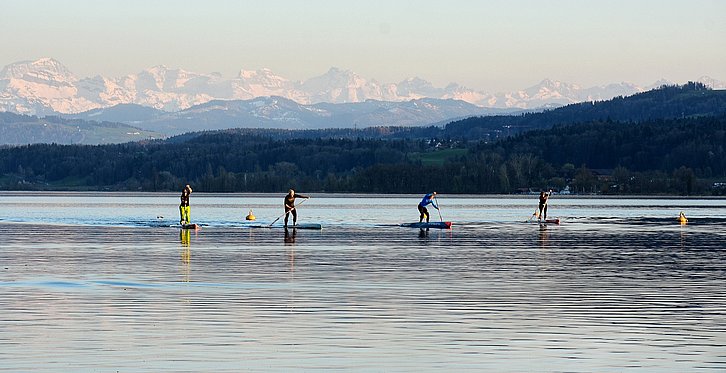
A Swiss awareness campaign promoting environmentally responsible stand-up paddling (SUP) has shown encouraging early results, according to a new evaluation by the Swiss Federal Institute for Forest, Snow and Landscape Research (WSL). Launched in 2021 under the slogan “Aufs Wasser mit Rücksicht” (On the Water with Respect), the initiative has been rolled out across 11 Swiss lakes, including Lake Greifensee. The aim is to raise awareness among paddlers about how to minimise their impact on sensitive wildlife habitats, particularly reed beds and protected zones where birds breed and nest.
Awareness Grows, Behaviour Shifts
WSL researchers found that awareness of the campaign rose steadily, reaching 36% of SUP users on Lake Greifensee by 2024. More importantly, paddlers who were familiar with the campaign reported significantly better environmental practices. These included keeping a distance of over 25 metres from reed beds, steering clear of nature protection areas, and reducing disturbances in ecologically sensitive zones.
“Our findings show a clear link between awareness and respectful behaviour,” said WSL researcher Matthias Angehrn. “The more people know about the campaign, the more likely they are to adapt their actions on the water.”
Experienced paddlers in particular demonstrated stronger knowledge of environmental guidelines compared to beginners, who were less aware of the campaign’s messages.
Gaps in Reach and the Road Ahead
Despite the progress, WSL notes that there are still gaps to be addressed—especially in reaching newer paddlers. Printed materials like posters and flyers proved helpful, but digital outreach remains limited. Many SUP users surveyed in 2024 reported never encountering the campaign online, despite efforts to expand its digital footprint.
To improve reach and impact, WSL recommends collaborating more closely with retailers to provide educational materials at the point of sale. The study also highlights the potential of social media influencers and paddling communities to amplify the campaign’s message.
A Model for Sustainable Recreation
Rather than relying on restrictive regulations, the campaign demonstrates how education can drive voluntary compliance and reduce environmental harm. By informing paddlers and encouraging responsible behaviour, it offers a model for balancing outdoor recreation with nature conservation.
“With recreational use on lakes continuing to grow, this kind of proactive approach is essential,” Angehrn added. “If we want to protect these habitats, we need solutions that work with people—not just rules that work against them.”